
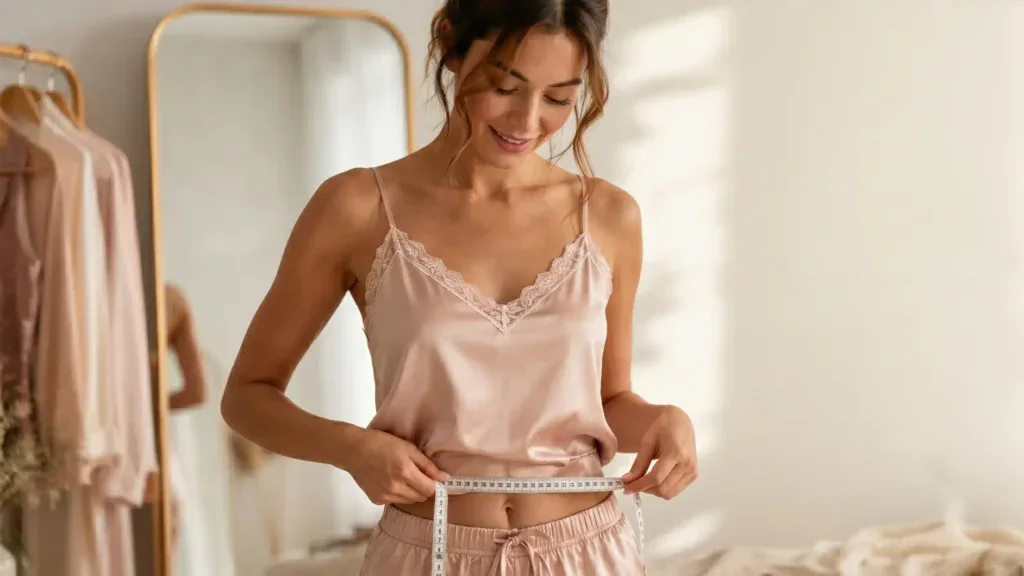
Buying pajamas and loungewear online should feel relaxing — not stressful. Yet one of the biggest frustrations shoppers face is choosing the wrong size. A pajama set that’s too tight can feel restrictive, while an oversized fit may lose the polished, cozy look you want.
That’s why accurate body measurements matter.
Our Sleep & Loungewear Size Guide is designed around real body measurements — not just generic S/M/L labels. We also consider body shape differences and fabric stretch levels to help you find a more personalized fit.
Before placing your next order, take a few minutes to measure yourself correctly. It can make all the difference in comfort, drape, and overall fit.
Why Height & Weight Alone Aren’t Enough
Many shoppers try to choose sleepwear based only on height and weight. Unfortunately, that often leads to inconsistent sizing.
Two people with the same height and weight can have completely different proportions:
- One may have a fuller bust
- Another may carry more shape in the hips
- Some have longer torsos or broader shoulders
- Fabric stretch can also dramatically affect fit
That’s why body measurements are the most reliable way to choose pajamas and loungewear — especially for satin sets, lace-trim styles, modal fabrics, and relaxed lounge pieces.
Before You Start Measuring
To get the most accurate measurements, prepare the following:
What You’ll Need
- A soft measuring tape (not a metal tape measure)
- A mirror
- Thin clothing or fitted undergarments
Best Time to Measure
Measure yourself in the afternoon or evening whenever possible. Your body naturally expands slightly throughout the day, giving a more realistic everyday fit.
Proper Posture
- Stand naturally
- Keep your breathing relaxed
- Don’t suck in your stomach
- Don’t exaggerate your posture
Natural measurements lead to more comfortable sleepwear sizing.
Step-by-Step Pajama Measurement Guide
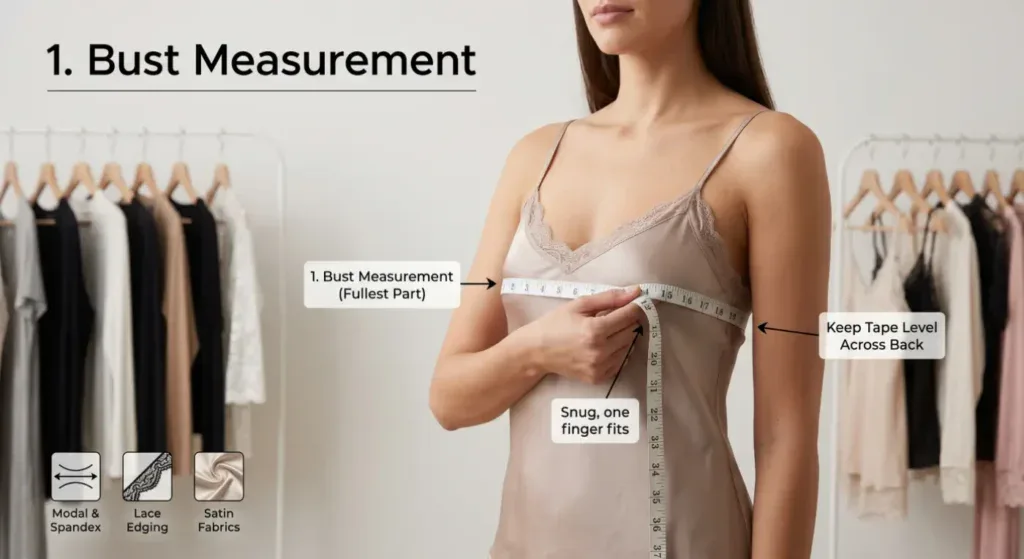
1. Bust Measurement
Where to Measure
Wrap the measuring tape around the fullest part of your bust while keeping the tape level across your back.
Tips for Accuracy
- Let your arms rest naturally at your sides
- Keep the tape snug but not tight
- You should be able to slide one finger under the tape comfortably
Important for Lace & Stretch Styles
If you’re shopping for lace-trim pajamas, camisoles, or elastic bust designs, remember that some fabrics stretch while decorative trims may not.
For example:
- Modal and spandex blends usually offer flexibility
- Lace edging often has limited stretch
- Satin fabrics typically have lower elasticity
If your bust measurement falls between sizes, fabric stretch becomes especially important.
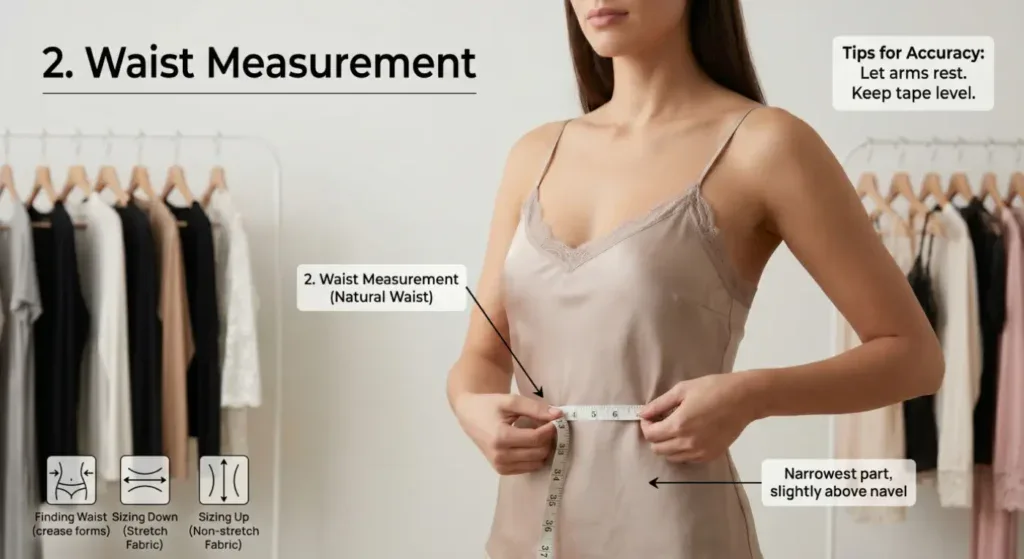
2. Waist Measurement
Where to Measure
Measure around your natural waistline — usually the narrowest part of your torso, slightly above the belly button.
How to Find It
If you’re unsure where your natural waist is:
- Stand naturally
- Bend gently to one side
- The crease that forms is your natural waistline
Common Mistake
Do not hold your breath or pull your stomach inward while measuring.
Between Sizes?
If your waist measurement falls between two sizes:
- Choose based on fabric stretch
- Stretch fabrics may allow sizing down
- Non-stretch fabrics usually fit better when sizing up
3. Hip Measurement

Where to Measure
Measure around the fullest part of your hips and seat area, typically near the upper thigh level.
Tips
- Stand with your feet together
- Keep the tape horizontal and level
- Avoid pulling the tape too tightly
Body Shape Matters
Hip measurements are especially important for:
- Relaxed lounge pants
- Satin shorts
- Wide-leg pajama bottoms
- Fitted sleep shorts
If you have a pear-shaped body, your hip measurement should usually determine your bottom size.
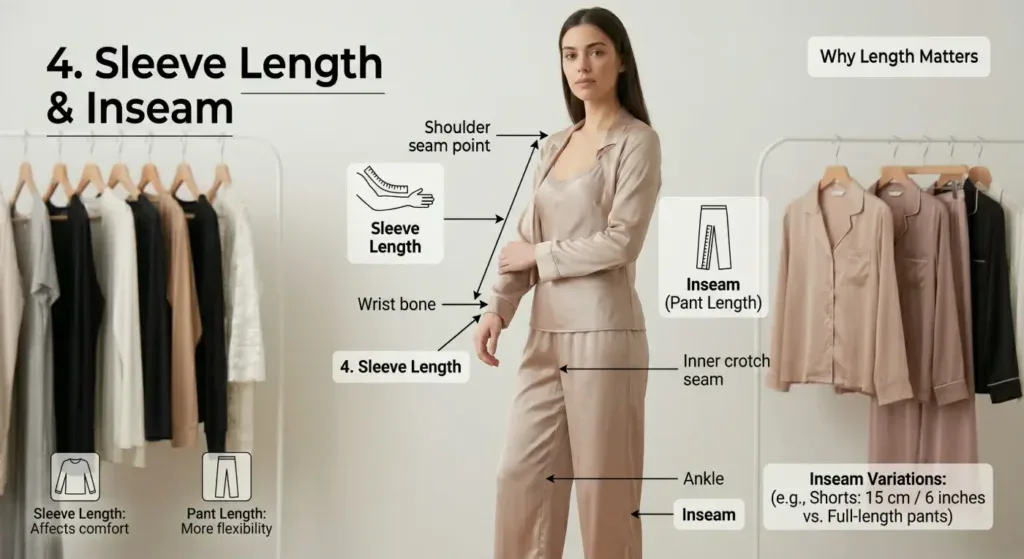
4. Sleeve Length & Inseam
Sleeve Length
Measure from:
- The shoulder seam point
- Down along the arm
- To the wrist bone
Inseam (Pant Length)
Measure from:
- The inner crotch seam
- Down to the ankle
Some pajama shorts may list shorter inseams (such as 15 cm / 6 inches), while full-length lounge pants may vary depending on style.
Why Length Matters
Loungewear generally allows more flexibility in pant length, but sleeve length can significantly affect comfort — especially for long-sleeve sleep sets.
Choosing the Best Size for Your Body Shape
Our size philosophy is designed to be body-shape inclusive. Here’s how different body types can approach sizing more confidently.
| Body Shape | What to Prioritize | Recommended Fit Strategy |
|---|---|---|
| Hourglass | Bust and hips are balanced, waist is smaller | Prioritize waist fit while keeping top and bottom proportions balanced |
| Pear Shape | Hips noticeably larger than bust | Choose size based on hip measurement; tops may size down if fabric stretches |
| Apple Shape | Waist similar to or larger than bust | Use the larger of bust or waist measurement; look for elastic waistbands |
| Rectangle | Similar bust, waist, and hip measurements | Follow standard size chart and check shoulder fit carefully |
You can also compare your proportions with our “Real Bodies, Real Fits” customer examples for more real-life fit references.
Understanding Fabric Stretch Before Choosing a Size
Fabric composition changes how pajamas fit your body.
High-Stretch Fabrics
Examples:
- Modal
- Spandex blends
- Ribbed knit fabrics
These materials:
- Adapt more easily to body curves
- Offer flexible comfort
- May allow you to choose your exact measurement or even size down for a closer fit
Low-Stretch or Structured Fabrics
Examples:
- Cotton poplin
- Linen
- Satin with minimal elastane
These fabrics:
- Hold their shape more rigidly
- Offer less flexibility
- Usually fit better when sizing up between sizes
Lace & Decorative Trims
Lace panels and decorative edging often stretch less than the main fabric.
Avoid choosing overly tight fits if:
- The neckline contains lace trim
- The waistband uses decorative elastic
- The garment has non-stretch embroidered detailing
Always check each product’s Fit & Fabric section before ordering.
International Size Conversion Tips
Sizing standards vary between countries, especially across:
- United States
- Canada
- Mexico
- Europe
- Asia
To simplify sizing consistency, our Sleep & Loungewear Size Guide uses inches as the primary measurement standard.
Helpful Tip
Measure and record your body measurements directly in inches to avoid conversion errors.
You can also use our International Size Conversion Chart to compare:
- US sizes
- Canadian sizes
- Mexican sizes
- International equivalents
Common Measuring Mistakes to Avoid
❌ Measuring Over Thick Clothing
Bulky sweaters or layered clothing can add inaccurate inches.
❌ Pulling the Tape Too Tight
A tight measuring tape creates unrealistic sizing expectations.
❌ Measuring Only Once
Always measure twice to confirm accuracy.
❌ Ignoring Body Shape
Height and weight alone don’t reflect proportions, curves, or fit preferences.
Frequently Asked Questions
“I’m Between Sizes. What Should I Do?”
Start with your exact measurements first.
Then consider:
- Fabric stretch
- Desired fit (relaxed vs fitted)
- Your body shape
- Whether the garment contains lace or structured fabric
General rule:
- Stretch fabric → choose closer fit
- Non-stretch fabric → size up for comfort
“What If My Pajamas Still Don’t Fit?”
Even with careful measuring, personal comfort preferences vary.
That’s why we offer:
- Flexible exchanges
- Helpful fit support
- Easy return solutions
Our goal is helping you feel comfortable, confident, and relaxed in your sleepwear.
Final Tips for the Perfect Pajama Fit
Remember this simple measuring rule:
“Measure naturally, keep the tape level, and record carefully.”
And always consider:
- Body shape
- Fabric stretch
- Desired comfort level
- Style silhouette
Ready to Find Your Perfect Fit?
Before ordering:
✔ Measure your bust, waist, hips, and inseam
✔ Compare your numbers with our Sleep & Loungewear Size Guide
✔ Review the product’s Fit & Fabric details
✔ Explore “Real Bodies, Real Fits” for similar body references
A few extra minutes measuring today can help you enjoy a far more comfortable pajama fit tomorrow.