
The global loungewear market was valued at $16.7 billion in 2025 and is projected to exceed $25 billion by 2032 — growing at a CAGR of 6.2% (Allied Market Research). The pandemic permanently shifted consumer habits: people now expect comfort-first apparel that doesn’t sacrifice style.
But most first-time buyers discover this truth too late:
Your supplier IS your product. Every bolt of fabric, every seam stitch, every delivery deadline — it all passes through their hands. One wrong supplier can burn through your margin, destroy your brand reputation, and delay your launch by months.
At Wingtulounge, we made supplier vetting our core brand strategy from day one. Before launching our premium loungewear line, we interviewed 40+ suppliers, tested samples from 12, and walked away from 9 — before finding partners who truly understood our commitment to fabric quality and consistent craftsmanship. That months-long vetting process became the foundation of the Wingtulounge brand.
A loungewear buyer shared on Reddit’s r/AmazonFBA: “Our first supplier delivered 3,000 units with loose elastic waistbands. We had to sell at 60% off just to clear inventory. That mistake cost us $47,000.”
“Why is choosing the right loungewear wholesale supplier crucial?” is not an academic question — for any B2B buyer, it is a matter of financial survival.
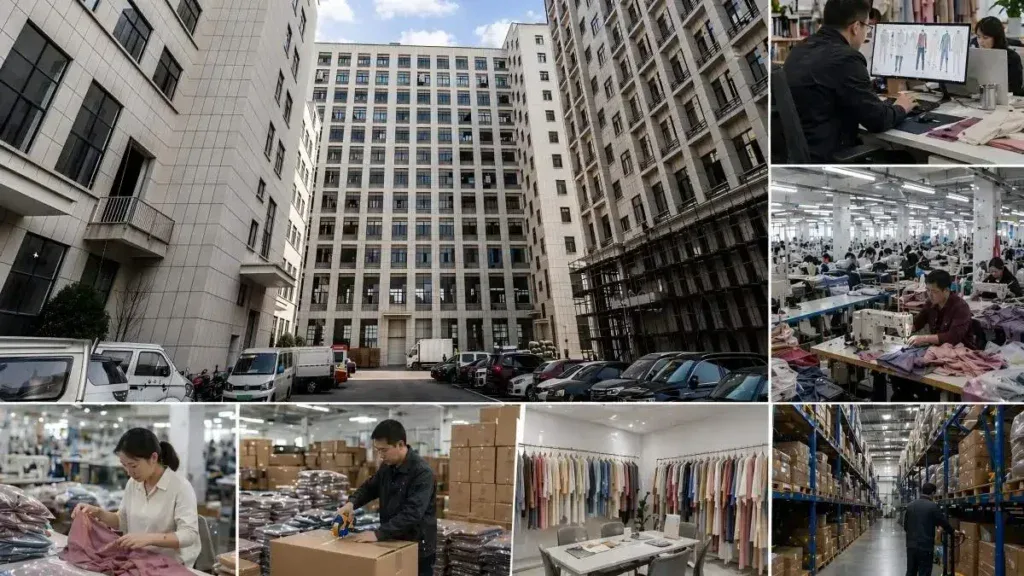
The Hidden Costs of a Wrong Supplier
Choosing the wrong loungewear wholesale supplier costs far more than product quality. Here are the costs that never appear on an initial quote:
Quality Inconsistency → Higher Return Rates & Brand Damage
A loungewear line lives or dies on fabric feel. When a supplier switches fabric sources mid-production without telling you, the result is:
- Shrinkage variation — first batch shrinks 3%, second batch shrinks 8%
- Pilling problems — fabric downgrade causes surface fuzz after 2 washes
- Color mismatch — dye lot variance between production runs
Real data: A 2025 survey of 200 loungewear DTC brands found that 67% experienced quality inconsistency with their first wholesale supplier. The average return rate jumped from 8% to 23% in those cases. (Source: Apparel Supply Chain Report 2025)
Missed Delivery Windows → Lost Contracts
Loungewear is highly seasonal:
- Q4 peak (holiday gifting season) — Nov to Dec
- Spring refresh — March to April
- Back-to-college — August to September
Miss your October delivery for a November holiday launch? You either:
- Pay air freight premiums (3-5x ocean freight) — eating 15-20% of margin
- Miss the window entirely — inventory sits until next year
One missed peak season can erase an entire year’s projected profit.
Communication Breakdowns → Endless Revisions
A supplier with weak English or unclear internal processes will:
- Misinterpret spec sheets (especially measurements, stitching details)
- Approve samples without actually checking them
- Ship what they think you wanted, not what you specified
Each revision cycle wastes 7-14 days. Three rounds of revisions = one month lost.
Hidden Fees & MOQ Traps
Common hidden costs that only surface after you commit:
| Hidden Fee | Typical Cost | When It Appears |
|---|---|---|
| Sample fee waiver reversal | $50-150/sample | After negotiation closes |
| Color matching surcharge | $200-500/color | After lab dip approval |
| Overrun charge (excess production) | 5-10% of order | At final invoice |
| Packing upgrade fee | $0.20-0.50/unit | At shipping stage |
| Late payment interest (short-term) | 2-5% per month | In small print of contract |
What Defines a “Right” Loungewear Wholesale Supplier
A great loungewear supplier is not just a factory that cuts and sews. Here are the specific evaluation criteria:
Fabric Expertise
Loungewear is fabric-first. Your supplier should demonstrate deep knowledge of:
| Fabric Type | Key Properties | Common Price Range (CIF) |
|---|---|---|
| Modal (Lenzing™) | Super soft, 50% more absorbent than cotton, biodegradable | $3.50-5.50/yd |
| Bamboo viscose | Naturally thermoregulating, antibacterial, 60% more breathable | $3.80-6.00/yd |
| French terry | Brushed loop back, sweatshirt-weight, structured drape | $4.00-6.50/yd |
| Pima cotton (Supima®) | Extra-long staple fibers, 45% stronger than regular cotton, pill-resistant | $4.50-7.00/yd |
| TENCEL™ Lyocell | Closed-loop production, silky hand feel, moisture-wicking | $4.00-6.80/yd |
Wingtulounge standard: We only work with suppliers who can trace every fabric batch back to the mill lot number — because a 3% variance in GSM changes the entire drape and feel of a garment.
Production Capacity & Scalability
Ask these specific questions:
- MOQ per style per color: 200 pcs? 500 pcs? 1,000 pcs?
- Lead time for repeat order vs. first order: Is the first order 15 days longer?
- Peak capacity per month: If you need 20,000 units next month, can they deliver?
- Factory size & worker count: 50 workers is a workshop; 200+ is a factory
Customization Capabilities
Most loungewear buyers need some level of customization. For a brand like Wingtulounge, customization isn’t just about adding a logo — it’s about creating a distinct tactile identity through fabric selection and other details that signal premium quality before the customer even touches the garment.
| Customization Level | What It Includes | Typical Premium |
|---|---|---|
| Level 1: Hang tag + poly bag | Basic branding on packaging | +2-5% |
| Level 2: Woven label + neck print | Permanent brand mark on garment | +5-10% |
| Level 3: Custom color + trim | Unique colorway per style | +10-18% |
| Level 4: Full private label | Design-to-ship from your spec | +15-25% |
| Level 5: Exclusive design | Your IP, their manufacturing | +20-35% |
Compliance & Certifications
Depending on your target market, these certifications are essential for loungewear:
- OEKO-TEX Standard 100 — guarantees no harmful chemicals (EU essential)
- GOTS — organic fiber certification (premium market)
- BSCI / SMETA — social compliance audit (required by most EU/US retailers)
- REACH compliance — EU chemical regulation
- CPSIA compliance — US consumer product safety (mandatory for kids loungewear)
- Flammability testing — required for US market (16 CFR Part 1610)
Red Flags to Watch For
These warning signs should make you walk away — or at minimum, investigate aggressively:
Pricing That Defies Physics
If a quote is 30-40% below market average, you are not getting a deal — you are getting corners cut:
- Fabric downgraded to cheaper alternatives (e.g., low-grade cotton instead of pima)
- Labor shortcuts (missing reinforcement stitching, loose seam allowances)
- Non-compliant dyes (heavy metals, azo compounds banned in EU)
- Thin packaging that damages in transit
Market baseline pricing (2025-2026, CIF to US West Coast):
| Garment Type | Mid-range (FOB) | Premium (FOB) |
|---|---|---|
| Basic modal cami + shorts set | $5.50-7.00/set | $8.00-11.00/set |
| French terry hoodie + jogger set | $9.00-12.00/set | $13.00-18.00/set |
| Bamboo pajama set (long sleeve) | $7.50-10.00/set | $11.00-15.00/set |
| TENCEL™ nightgown | $6.00-8.50/pc | $9.00-13.00/pc |
Vague or Shifting MOQ Terms
Watch for these language patterns:
- “First order MOQ is higher” — Could be legitimate, but confirm repeat order MOQ
- “500 pcs per color” without specifying “per style” — Could mean 500 per colorway (trapping you into high total quantity)
Good practice: Get all MOQ terms in writing — per style, per color, and per order total.
No Physical Proof of Operations
Any supplier who cannot provide at least 3 of these is hiding something:
- Factory video call (real-time, not recorded)
- Photos of production floor with workers (current, not portfolio)
- Past shipment records or bill of lading samples
- Trade reference from at least 2 existing buyers
- Presence on a third-party verification platform (SGS onsite audit, Alibaba Verified, etc.)
Disproportionate Payment Terms
Standard wholesale payment terms:
- First order: 30%-50% deposit, 50%-70% balance before shipment (or against B/L copy)
- Repeat orders: 30%-50% deposit, 50%-70% against B/L (trusted suppliers may offer net 30-60)
- L/C: Only practical for orders above $20,000-50,000
Red flag: Supplier demands 50-60% deposit or requires full payment before production.
How to Vet Suppliers Like a Pro
Step 1: Source from Verified Channels
| Channel | Pros | Cons |
|---|---|---|
| Alibaba (Verified badge) | Buyer protection, trade assurance, review history | Many traders mixed with real factories |
| Canton Fair (Guangzhou) | Meet face-to-face, touch fabrics, compare 50+ suppliers | Once/twice per year, travel cost |
| Global Sources | Focused on Asian manufacturers, higher curation | Smaller supplier pool |
| Industry referrals | Highest trust, vetted by peers | Limited options |
| Sourcing agents | Local oversight, QC representation | 5-15% commission |
Step 2: Third-Party Audit
Never skip this for first orders above $5,000. Minimum checklist for a self-audit video call:
- Cutting room — fabric inspection process visible
- Sewing floor — at least 20+ workers operating (for mid-size factory)
- Ironing/finishing station — final QC check before packing
- Packing area — how garments are folded, bagged, boxed
- Warehouse — raw material inventory (are fabrics in stock?)
- Sample room — past production samples (ask to see 3-5 similar loungewear items)
Step 3: Trial Order Strategy
Do not place your main order first. Structure a trial:
| Order Phase | Volume | Purpose |
|---|---|---|
| Sample | 1-5 pcs | Quality check, fit test, color approval |
| Trial bulk | 100-300 pcs per style | Production quality, delivery reliability, communication test |
| First bulk | 500-2,000 pcs | Full commercial run with confidence |
| Repeat bulk | Scale up | Negotiate better pricing, extended payment terms |
The Competitive Edge from the Right Partner
Speed to Market
When your competitors are still fixing QC issues with their third supplier, you are already on your third collection.
A well-vetted supplier can compress your timeline:
| Stage | Weak Supplier | Strong Supplier |
|---|---|---|
| Sampling | 15-25 days | 7-12 days |
| Bulk production | 45-60 days | 25-40 days |
| Shipping (sea) | 25-35 days | 25-35 days (stable) |
| Total lead time | 85-120 days | 57-87 days |
30-40 day advantage = one extra collection per year.
Margin Protection
Strong unit economics create strategic flexibility:
- Price matching: Lower landed cost lets you win retail RFP bids
- Aggressive promotions: BOGO 50% off without losing money
- Higher margin: Reinvest into marketing, product development, or better packaging
Repeat Purchase Velocity
Consistent quality = repeat buyers return faster. Loungewear has one of the highest repurchase rates in apparel — but only if the quality is consistent.
A single bad batch can destroy your repeat rate for that customer segment.
Product Differentiation
The right supplier opens doors to:
- Exclusive fabric blends (e.g., modal-hemp blend only they produce)
- Innovative finishes (enzyme-washed, garment-dyed, anti-static)
- Sustainable materials (recycled polyester, LENZING™ ECOVERO™)
- Private label packaging (custom boxes, tissue paper, ribbon)
These differentiators justify 15-25% higher retail pricing vs. unbranded competitors. For Wingtulounge, exclusive fabric blends, custom garment-dyed finishes, and embroidery craftsmanship are what allow us to command premium positioning in a crowded market — customers feel the difference before they read the label.
Conclusion
Choosing the right loungewear wholesale supplier is the single most impactful decision your business will make — more than your website design, your ad targeting, or even your product pricing. Because the supplier is the product.
The right supplier is not the cheapest. The right supplier is the one who:
- Understands fabric science and can recommend the right material for your price point
- Has production capacity that scales with your growth
- Maintains documented QC systems with third-party verification
- Communicates in clear, prompt, honest terms — even when the news is bad
- Respects compliance and can produce documentation for every market you enter
The time you spend vetting suppliers is not a cost — it is an investment in predictable margin. Every hour you invest in due diligence saves you from the 6-figure “learning cost” of a failed supplier relationship.
Final Checklist — Before You Commit
- Fabric swatches received and tested
- Sample garment approved (fit, stitching, finish)
- Factory video call completed
- Third-party audit report reviewed (or self-audit performed)
- Trade records verified (Panjiva / ImportGenius)
- Payment terms agreed and documented
- MOQ terms written into contract
- Lead times confirmed for both sample and bulk
- Compliance certifications verified
- At least 2 buyer references contacted
At Wingtulounge, our commitment starts with the supply chain: every piece begins with a fabric we’ve touched, a factory we’ve walked through, and a QC standard we’ve verified ourselves. That’s how we deliver loungewear that feels as good as it looks — wash after wash, season after season.